
Common Interview Questions and Answers in South Africa
Common Interview Questions and How to Answer Them in South Africa
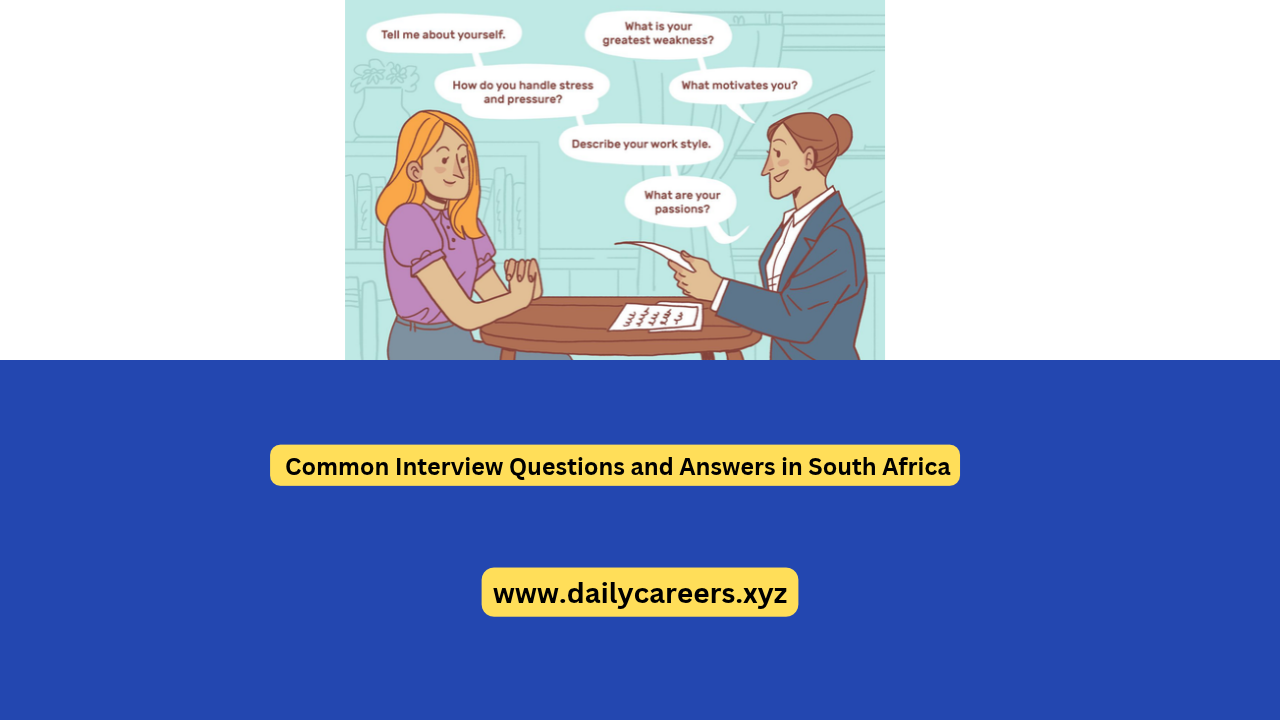
Getting an interview is an opportunity to show an employer more than what appears on your CV. It gives you a chance to explain your abilities, discuss your experience, and demonstrate that you understand the position.
However, knowing what to say can feel difficult, especially when you are applying for your first job.
This guide covers common interview questions and answers for South African job seekers, with examples for entry-level retail, administration, customer service, and general work positions.
Use these examples to prepare your own responses. Do not memorise answers that describe experience or skills you do not have.
How to Prepare Before Your Interview
Start by reading the job advertisement again. Identify the main duties, required skills, workplace location, and any conditions such as shifts or weekend work.
Next, research the employer through its official website. Understand what the organisation does and how the advertised role contributes to its work.
Prepare a few real examples of times you:
- Worked with other people.
- Solved a problem.
- Completed a task under pressure.
- Helped someone.
- Learned something new.
- Took responsibility for a mistake.
These examples can come from employment, school, college, volunteering, community activities, or informal work.
You do not need a long employment history to explain how you approach responsibilities.
1. “Tell Me About Yourself”
This question gives you an opportunity to introduce your background and explain why it relates to the position.
Keep your answer focused on your education, relevant experience or skills, and interest in the role. You do not need to tell your full life story.
Sample Answer for a First-Time Job Seeker
“I recently completed matric and am looking for an opportunity to develop workplace experience. During school, I enjoyed group projects and often helped organise our tasks and deadlines. I also assisted at a family shop during holidays, where I helped arrange stock and answer customer questions. I am interested in this retail position because I enjoy practical work and interacting with people.”
If you have not assisted in a shop, replace that example with something you have actually done.
Preparation tip: Aim for a clear introduction of roughly one minute, then allow the interviewer to ask follow-up questions.
2. “Why Do You Want to Work Here?”
Connect something specific about the employer or position with your interests and abilities.
Avoid giving an answer that could apply to any company, such as “because your company is the best,” without explaining why.
Sample Answer for a Retail Position
“I am interested in the customer service and stock responsibilities described in the advert. I enjoy helping people and keeping things organised. After reading about your stores and products, I would like the opportunity to learn your procedures and contribute to the team.”
Sample Answer for an Administration Position
“The role involves document preparation, record keeping, and assisting with enquiries. Those duties match the skills I have been developing through computer-based assignments. I would like to apply those skills in an office and learn how your administrative processes work.”
Mention only things you have confirmed about the employer.
3. “Why Should We Hire You?”
Choose two or three strengths that match the vacancy and explain what supports them.
You do not need to claim that you are better than every other candidate.
Sample Answer
“I can offer careful work, a willingness to learn, and experience completing tasks with others. In a recent school project, I organised our information and checked the final document before submission. I understand that this position requires accuracy and following procedures, and I would bring that same approach to the work.”
A stronger answer explains what you can contribute instead of simply saying, “I really need a job.”
4. “What Are Your Strengths?”
Select a strength that matters for the position. Then provide a short example.
Relevant strengths might include organisation, communication, patience, attention to detail, or practical problem-solving.
Sample Answer for Administration
“One of my strengths is keeping information organised. When working on assignments, I use clearly named folders and keep track of deadlines. During a group project, this helped us find the correct documents quickly and submit our work on time.”
Sample Answer for Customer Service
“I am patient when explaining information. When helping other learners understand an assignment, I would listen to what they found confusing and explain the steps more clearly.”
Avoid listing many strengths without evidence.
5. “What Is Your Weakness?”
Choose a genuine area you are improving. Explain what you are doing about it and any progress you have made.
Avoid pretending that you have no weaknesses or choosing a rehearsed answer that does not reflect your experience.
Sample Answer
“I used to feel nervous speaking in front of a group. I have been working on this by volunteering to present parts of our class assignments and practising beforehand. I still prepare carefully, but I am becoming more comfortable explaining my ideas.”
Your answer should show self-awareness. Do not claim you have solved the issue completely if you are still working on it.
6. “You Have No Work Experience. How Will You Manage?”
Acknowledge that you are new to formal employment, then explain the relevant skills and habits you already have.
Sample Answer
“This would be my first formal job, so I understand that I will need to learn your procedures. Through school projects, I have practised following instructions, meeting deadlines, and working with other people. When learning a new task, I take notes, ask questions where necessary, and check that I have understood before continuing.”
Do not apologise repeatedly for being inexperienced. Focus on how you learn and take responsibility.
7. “Tell Me About a Time You Worked in a Team”
Use a specific example rather than saying only that you work well with others.
A useful structure is STAR:
- Situation: What was happening?
- Task: What needed to be achieved?
- Action: What did you personally do?
- Result: What happened?
Sample Answer
“In a school group project, we had to prepare a presentation within one week. Two members were unsure which tasks they were responsible for, and we were falling behind. I suggested dividing the presentation into sections and agreeing on a deadline for each section. I also helped combine the slides. We finished in time and everyone had a part to present.”
Describe your contribution without taking credit for the entire team’s work.
8. “How Would You Handle a Difficult Customer?”
For a hypothetical question, explain your approach. Show that you can remain respectful, understand the problem, and follow company procedures.
Sample Answer
“I would listen without interrupting so I could understand the concern. I would explain what I could do within the store’s policy and avoid making promises I could not keep. If the matter required approval or I could not resolve it, I would involve my supervisor. If the customer became threatening, I would follow the workplace safety procedure and ask for assistance.”
If you have a real example, you can add it briefly.
Avoid saying you would argue with the customer or agree to any demand regardless of policy.
9. “How Do You Handle Pressure?”
Explain the practical steps you use to stay organised when several tasks need attention.
Sample Answer
“When I have several deadlines, I list the tasks and identify which ones are most urgent. I break larger tasks into smaller steps and check my progress. If I realise I cannot meet a deadline, I communicate early instead of waiting until the last moment.”
You can support this with an example from exams, an event, a project, or previous work.
Saying “I never feel pressure” is less useful than explaining how you manage it.
10. “Tell Me About a Mistake You Made”
Choose an example you can discuss honestly. Explain the mistake, how you addressed it, and what you changed afterwards.
Sample Answer
“I once sent an older version of a group assignment to a teammate. When I noticed the error, I told them immediately and sent the correct file. After that, I started using clear file names with dates and checking attachments before sending them.”
The aim is to show accountability. Avoid blaming everyone else or choosing an example where you cannot explain what you learned.
11. “Why Did You Leave Your Previous Job?”
If you have worked before, give a factual, professional explanation.
Sample Answer for a Temporary Contract
“My contract was for a fixed period and ended as planned. I gained useful experience working with customers, and I am now looking for another opportunity where I can build on those skills.”
Sample Answer for Seeking Growth
“I learned a lot in my previous role, but I am now looking for a position with more involvement in administration, which is the area I want to develop.”
If you were dismissed, do not describe it as a completed contract. Give an honest explanation without turning the answer into an argument about your previous employer.
12. “Can You Explain This Gap in Your CV?”
Explain the gap briefly and accurately. You do not have to share every personal detail.
Sample Answer
“During that period, I was looking for work and helping with responsibilities at home. I also practised my computer skills and updated my CV. I am now available and ready to commit to a suitable position.”
Only mention courses, volunteering, or other activities if you actually did them.
An employment gap does not need an elaborate story. A clear explanation is more useful.
13. “What Are Your Salary Expectations?”
Prepare by checking the salary or range in the advert, if one is provided. Consider the duties, working hours, benefits, and your circumstances.
Sample Answer When a Range Is Advertised
“The advertised salary range is in line with what I am considering. I would appreciate understanding the full package, working hours, and responsibilities before discussing the final figure.”
Sample Answer When No Range Is Advertised
“Could you share the budgeted salary range for the role? I would like to understand the full responsibilities and package so that I can give a realistic expectation.”
If asked for a figure, be ready to provide a considered range. Avoid agreeing immediately to an amount you know would not work for you.
14. “Can You Work Shifts, Weekends, or Public Holidays?”
Answer honestly. Consider transport, study commitments, caregiving responsibilities, and the actual shift times.
Sample Answer
“I am available for weekend work and shifts. Could you explain the usual starting and finishing times so I can confirm my transport arrangements?”
If you have a restriction, state it clearly:
“I am available on weekdays and Saturdays, but I currently have a study commitment on Sunday mornings.”
Do not promise unrestricted availability if you cannot maintain it.
15. “Do You Have Any Questions for Us?”
Prepare two or three questions that help you understand the position.
Useful examples include:
- “What would my main priorities be during the first month?”
- “What training is provided for someone starting in this role?”
- “How is performance assessed?”
- “What does a typical working day look like?”
- “What are the next steps in the recruitment process?”
Listen during the interview so you do not ask questions that have already been answered.
Practical Interview Tips
Confirm the Arrangements
Check the date, time, venue, contact person, and whether the interview is in person, by telephone, or online.
For an in-person interview, plan your route and allow extra time for transport delays. Aim to arrive around 10–15 minutes early.
Prepare Requested Documents
Bring or submit the documents specified in the invitation. Keep a copy of your CV available so you can refer to the same dates and details as the interviewer.
Dress Neatly
Choose clean, tidy clothing appropriate for the workplace. You do not need expensive clothes to present yourself professionally.
Prepare for an Online Interview
Test your microphone, camera, internet connection, and meeting link beforehand. Charge your device and choose a quiet location where possible.
If your connection fails, contact the interviewer promptly and explain what happened.
Ask for Clarification
If you do not understand a question, say:
“Could you please repeat or explain the question?”
It is better to clarify than answer a different question.
Take a Moment Before Answering
A short pause is acceptable. Gather your thoughts and give a direct answer, followed by a relevant example.
Common Interview Mistakes to Avoid
- Memorising answers that do not reflect your experience.
- Giving lengthy answers without addressing the question.
- Claiming skills you cannot demonstrate.
- Speaking negatively about previous colleagues or employers.
- Arriving without understanding the vacancy.
- Interrupting the interviewer.
- Promising availability you cannot provide.
- Failing to prepare any questions.
Frequently Asked Questions
What if I become nervous?
Practise aloud before the interview and prepare a few examples you know well. During the interview, slow down, breathe, and focus on answering one question at a time.
Can I use examples from school?
Yes. School projects, leadership responsibilities, volunteering, and informal work can help demonstrate relevant abilities, especially when you are applying for your first job.
What if I do not know an answer?
Be honest. Explain what you do know and, where appropriate, how you would find the answer or seek guidance.
For example:
“I have not used that system before, but I have used spreadsheets for basic data entry. I would need training on your system and would take notes while learning.”
Should I mention that I need the job?
You can express enthusiasm, but focus your answer on the role and what you can contribute. Financial need alone does not explain your suitability for the position.
Your Interview Preparation Checklist
Before the interview, make sure you can:
- Introduce yourself clearly.
- Explain why you want the position.
- Describe two or three relevant strengths.
- Discuss an area you are improving.
- Give examples of teamwork, problem-solving, and responsibility.
- Explain your availability