
How to Explain an Employment Gap on Your CV
How to Explain an Employment Gap in Your CV and Interview
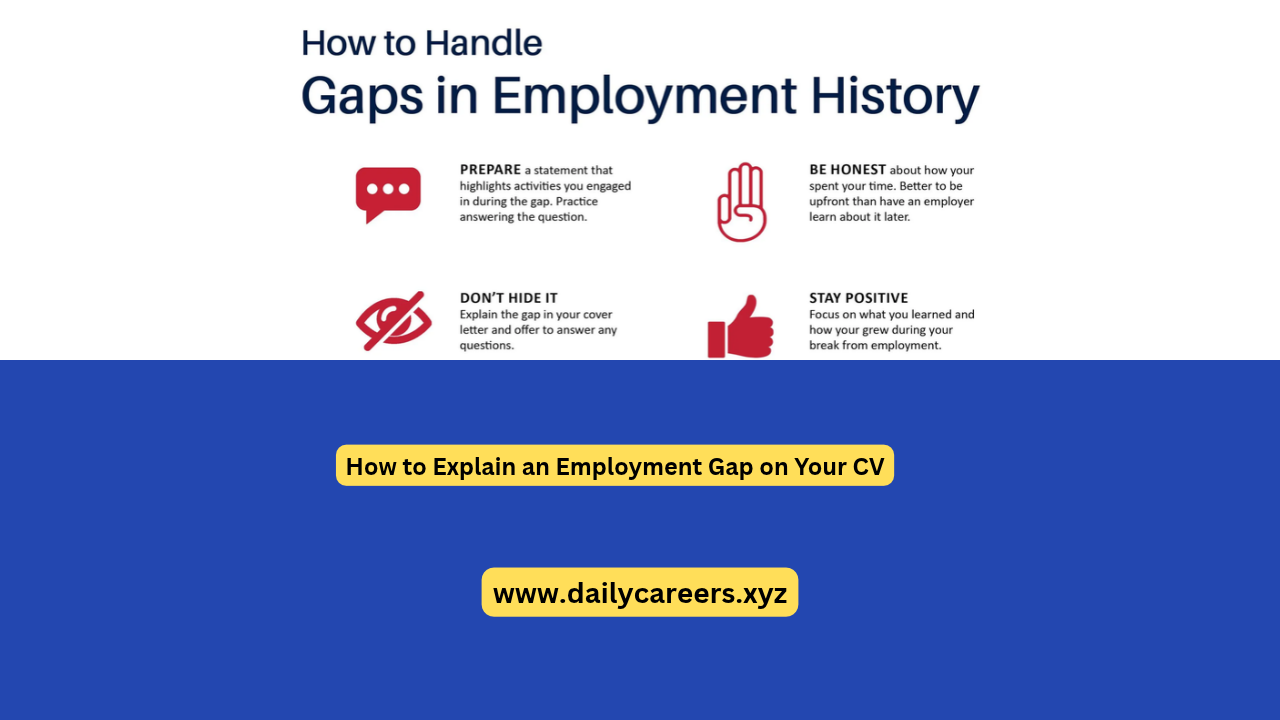
An employment gap can make you feel uncertain when updating your CV or preparing for an interview. You may worry that an employer will judge you for spending time without formal work.
However, a gap does not tell your whole story. People leave employment or remain outside the workplace for many reasons, including job searching, studying, caregiving, health circumstances, and the end of temporary contracts.
Knowing how to explain an employment gap can help you present your background clearly without inventing experience or sharing unnecessary personal details.
This guide provides practical examples for South African job seekers, including first-time applicants and people returning to work.
What Is an Employment Gap?
An employment gap is a period between jobs when you were not in formal employment.
For a first-time applicant, there may also be time between finishing school or studying and starting a first job. That is not a gap between employers, but an interviewer may still ask what you have been doing since completing your education.
You do not need an elaborate explanation for every short break. Focus on periods that are noticeable in your timeline or that the interviewer asks about.
The aim is to give an accurate account of your background and explain your readiness for the position.
1. Keep Your Explanation Honest and Brief
A useful answer usually covers three points:
- Why the gap happened.
- What you did during that time, if relevant.
- Why you are ready for the opportunity now.
For example:
“My temporary contract ended, and I have been looking for another suitable position. During that time, I practised my spreadsheet skills and helped with occasional administration at a family business. I am now available for a full-time role.”
Only include activities that actually happened.
If you mainly searched for work, say so. You do not need to invent a course, business, or volunteer position to make the period sound more impressive.
2. Decide Whether to Explain the Gap on Your CV
Not every break needs a separate CV entry.
A brief explanation may help when a longer period would otherwise make your timeline unclear. Use a neutral heading and accurate dates.
Example: Job Searching
Career Break and Job Search | March 2024–November 2024
Sought suitable employment following the completion of a fixed-term contract.
Example: Family Responsibilities
Career Break — Family Responsibilities | January 2023–June 2024
Took time away from formal employment to provide family care.
Example: Further Study
Full-Time Study | February 2023–November 2024
Completed [Qualification] at [Institution].
If the study already appears clearly in your education section, you may not need to repeat it.
Keep the explanation proportionate. Your CV should still give most of its space to relevant skills, education, achievements, and work.
3. Use Accurate Dates
Choose a consistent date format, such as:
April 2022–September 2023
Check that dates match across your CV, application forms, and supporting records.
Do not extend a previous job’s dates to cover unemployment. Similarly, do not describe occasional help as continuous full-time employment.
If you cannot remember a date, check old contracts, emails, or employment records where available. Follow the level of detail requested by the application form rather than guessing.
4. Explain Unemployment Without Apologising for It
You can acknowledge that finding work took longer than expected without sounding defensive.
Sample Interview Answer
“After my previous role ended, I spent several months applying for positions that matched my experience. I did not secure a suitable opportunity during that period. I have continued reviewing my applications and preparing for interviews, and I am available to start a new role.”
This answer is direct. It does not blame other people or pretend that every month involved a major achievement.
Avoid repeatedly saying, “I know the gap looks bad.” Explain the facts, then return to what you can contribute.
5. Explain Time After Matric or Graduation
If you have not held a formal job, focus on your education, activities, and current direction.
Example for a Matriculant
“After completing matric, I started looking for entry-level work. I have not yet secured my first formal position. During that time, I helped with responsibilities at home and practised basic computer tasks. I am now looking for an opportunity where I can learn workplace procedures and contribute reliably.”
Example for a Graduate
“After completing my qualification, I applied for graduate and junior positions. While searching, I worked on a personal project to practise the skills I learned. I am interested in this role because it involves the type of work I want to develop professionally.”
If you did not complete a project or practise computer skills, leave those details out.
Related reading: How to Write a CV With No Experience in South Africa.
6. Explain a Gap Caused by Caregiving
Caregiving can involve substantial responsibilities, but you do not need to share another person’s medical history or private circumstances.
Sample Interview Answer
“I took time away from employment to care for a family member. My circumstances now allow me to return to work, and I am available for the hours described in the advertisement.”
If you still have responsibilities that affect your schedule, be accurate about your availability.
For example:
“I continue to have some family responsibilities, but I can commit to the advertised weekday hours.”
Do not promise unrestricted availability if that is not realistic.
On your CV, a short heading such as “Career Break — Family Care” may be enough.
7. Explain a Gap for Health or Personal Reasons
You can keep your explanation focused on the employment timeline and your ability to do the role. There is usually no need to turn a general interview answer into a detailed personal account.
Sample Interview Answer
“I took time away from work for personal health reasons. I am now ready to return and would like to discuss how my experience matches this position.”
Use that wording only if it accurately reflects your situation.
If you have ongoing needs or limitations relevant to the work, consider what practical arrangements you need to discuss. Do not claim to be fully recovered or able to perform duties you cannot safely manage.
A neutral CV entry might read:
Career Break — Personal Reasons | [Dates]
Avoid putting diagnoses or treatment histories on a general CV simply to fill a gap.
8. Explain a Gap for Studying or Training
State the qualification or training accurately and explain its relevance.
Sample Interview Answer
“I took time away from employment to complete my diploma. During the course, I developed skills in record keeping, spreadsheets, and business communication. I am now looking for an administration role where I can apply those skills.”
If your studies are unfinished, say so:
“I enrolled in [Programme] and completed [accurate description]. I did not complete the qualification. I am now focusing on finding suitable work.”
Do not describe a short course as a diploma or present incomplete studies as a completed qualification.
9. Explain the End of a Contract or Retrenchment
Give a factual explanation of how the employment ended.
Example: Fixed-Term Contract
“My position was a fixed-term contract that ended as scheduled. I then started looking for another opportunity. I am interested in this role because its duties match my experience in customer service and administration.”
Example: Retrenchment
“My role ended during a company restructuring. Since then, I have been looking for positions where I can use my experience in [relevant area].”
Use the reason that actually applies. A resignation, dismissal, contract expiry, and retrenchment should not be described interchangeably.
Avoid making claims about the employer that you cannot support.
10. Explain Resigning Before Finding Another Job
An interviewer may ask why you left without another position arranged.
Keep your answer honest and measured.
Sample Interview Answer
“I resigned because the working arrangements no longer fitted my circumstances. Finding another suitable role took longer than I expected. I am now focusing on positions where I can commit to the requirements, including this one.”
Where appropriate, give a more specific explanation, such as relocation or study.
Avoid using the interview to criticise a previous manager. Explain your decision and what you are looking for now.
11. Explain Informal Work or Self-Employment
A period without formal employment may still include genuine work.
Examples could include:
- Tutoring.
- Freelance design.
- Gardening services.
- Occasional event work.
- Assisting in a family business.
- Selling products.
- Short-term administrative support.
Describe the arrangement accurately.
CV Example
Freelance Graphic Design — Part-Time | May 2024–February 2025
- Created social media graphics for small local clients.
- Discussed design requirements and revised work following feedback.
- Managed agreed deadlines and file delivery.
Interview Example
“During that period, I completed occasional freelance design projects while looking for permanent work. The work was irregular, so I am now seeking a position with a more consistent schedule.”
Do not inflate client numbers, income, working hours, or responsibilities. Where possible, prepare appropriate work samples or references with permission.
A Simple Framework for Your Answer
Use this structure to prepare a response:
Reason: “My previous contract ended.”
Activity: “I searched for suitable roles and completed occasional customer-service work.”
Readiness: “I am available now, and this position matches my experience.”
Combined:
“My previous contract ended, and I searched for suitable roles while doing occasional customer-service work. I am available now, and this position matches my experience.”
You can usually explain the main point in a few sentences. Add detail if the interviewer asks.
What if You Did Not Complete Courses or Volunteer?
Be honest. Not every unemployed person has the money, time, transport, or circumstances needed to study or volunteer.
You could say:
“I was mainly focused on finding work and managing responsibilities at home. I did not complete formal training during that period. I am now preparing carefully for opportunities that match my skills.”
Then support your suitability with evidence from your previous employment, education, or other genuine experience.
Your answer does not need to suggest that every period of your life was professionally productive.
How to Address the Gap in a Cover Letter
Mention it briefly if doing so helps explain your application. Avoid making it the main subject of the letter.
Example
“Following a career break for family responsibilities, I am ready to return to administration work. My previous experience includes maintaining records, responding to enquiries, and preparing documents.”
The next paragraph can explain how those skills relate to the vacancy.
If the gap is already clear from your CV and does not need explanation, use the cover letter to focus on your fit for the role.
How to Prepare for Follow-Up Questions
An interviewer might ask:
- “What have you done to keep your skills current?”
- “Why are you returning now?”
- “Are you available for these hours?”
- “What type of role are you looking for?”
- “Can we contact your previous supervisor?”
Prepare truthful answers and supporting examples.
If your skills need refreshing, take a practical step before the interview. For example, practise creating a spreadsheet or preparing a document, then describe exactly what you have practised.
Do not say you completed certified training when you only watched tutorials.
Common Mistakes to Avoid
Inventing Employment
Do not create a company, position, or reference to cover a gap.
Changing Dates
An inaccurate timeline can raise questions that an honest explanation would have avoided.
Oversharing Personal Details
Give enough information to explain the period. You can keep the discussion focused on work and availability.
Sounding Defensive
Answer the question calmly. A request for clarification does not automatically mean the interviewer has rejected you.
Giving a Long, Unfocused Explanation
Avoid recounting every unsuccessful application or personal event. Explain the main reason and move to your readiness for the role.
Claiming Activities You Cannot Discuss
If you mention a course, project, or freelance work, be prepared to explain what you learned or did.
Frequently Asked Questions
How long must a gap be before I explain it?
There is no single rule for every employer. Consider whether the period makes your timeline unclear and respond honestly if asked. You do not need a separate CV entry for every short interval between jobs.
Can an employment gap stop me from getting hired?
Employers assess applications differently. A clear explanation helps them understand your background, but it cannot guarantee a particular outcome. Continue showing how you meet the role’s requirements.
Should I write “unemployed” on my CV?
You can, but a short, accurate heading such as “Career Break” or “Job Search” may provide more useful context. Do not use a heading that misrepresents what happened.
What if I have been out of work for several years?
Explain the main reason, identify relevant experience you still bring, and describe any genuine steps you are taking to prepare for returning. Consider whether you need to refresh specific skills for your target role.
Can I keep the reason private?
You can offer a brief explanation such as “personal circumstances” rather than volunteering detailed private information. Be ready to discuss practical matters relevant to the position, including availability and ability to perform its duties.
What if the interviewer asks something I am uncomfortable discussing?
You can respond politely:
“I would prefer to keep the personal details private, but I can confirm my availability and discuss how I would manage the responsibilities of this role.”
Adapt the answer to your actual circumstances.
Final Preparation Checklist
Before submitting your CV or attending an interview:
- Check that your dates are accurate.
- Decide whether a short CV entry would help.
- Prepare a clear explanation in your own words.
- Remove unsupported claims.
- Identify relevant skills and examples.
- Confirm your realistic availability.
- Practise moving from the gap explanation to your suitability.
An employment gap is one part of your history. Explain it honestly and briefly, then help the employer understand the skills, experience, and commitment you can bring to the position.